The Fire Was Intense. Your Insurance Fight Shouldn’t Be.
A fire can turn your life upside down in minutes. Then comes the insurance claim.
Suddenly, you’re documenting everything you lost, finding somewhere to stay, getting repair estimates, answering questions from claims adjusters, and trying to understand a property insurance policy you probably never expected to use. And when the insurance company delays, undervalues, or disputes your fire damage claim, recovery gets even harder.
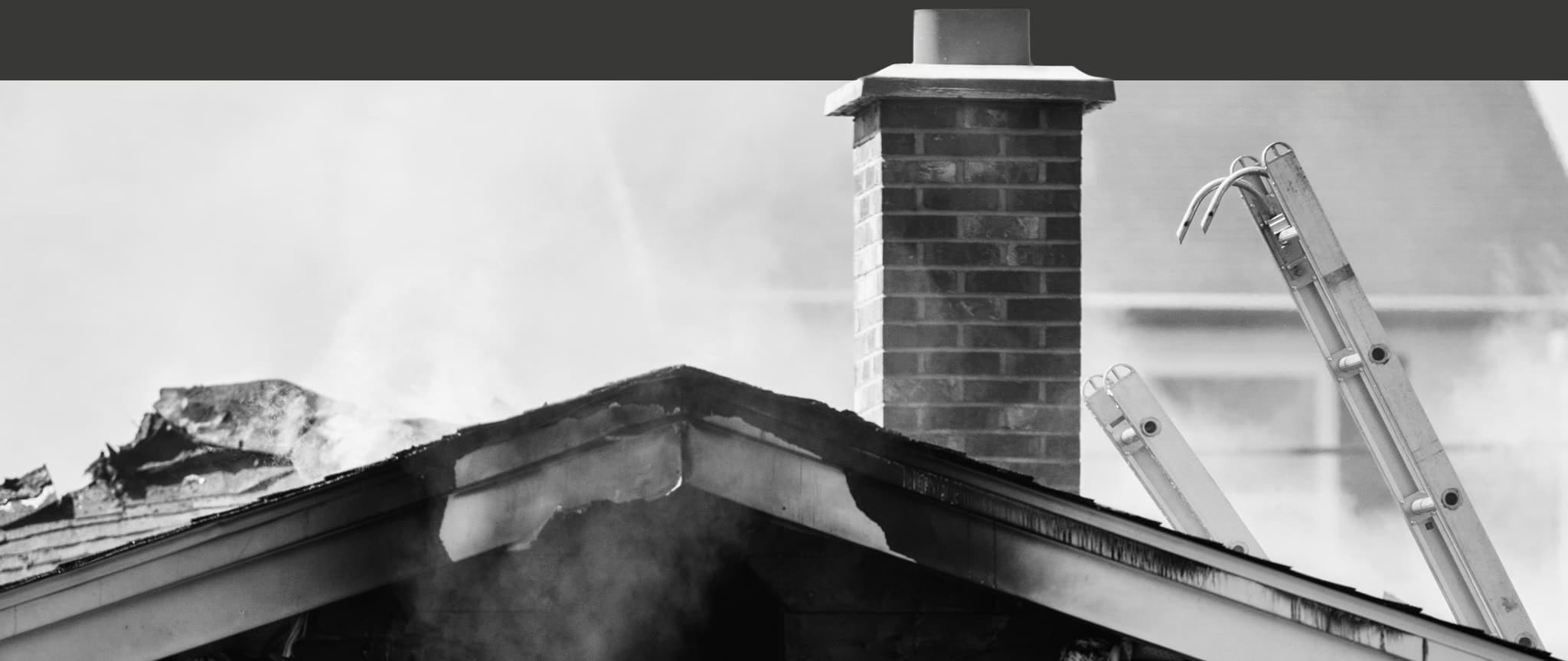
At Gordon Thomas Honeywell, our Tacoma fire damage insurance claim attorneys help home and other property owners navigate complicated fire damage insurance claims and disputes. We dig into the policy, the damage, and the insurer’s handling of your claim so you can focus less on fighting your insurance company and more on putting your property—and your life—back together.
We assist homeowners in Tacoma and surrounding areas deal with:
- Residential fire damage claims
- Wildfire-related property loss
- Smoke and soot damage
- Partial or total home loss
- Insurance claim disputes
From wildfires across Washington to unexpected residential fires, property damage has become an increasing concern for Tacoma home and property owners. Fires can spread quickly, leaving behind extensive structural damage, smoke contamination, and long-term safety concerns.
Depending on your property insurance policy, coverage may apply to the structure itself, damaged personal property, smoke and soot contamination, and additional living expenses when your home is unsafe to occupy.
A fire loss may involve:
- Structural damage: Fire damage can impact walls, roofing, flooring, electrical systems, HVAC equipment, and other parts of the building.
- Fire and smoke damage: Smoke, soot, ash, and residue can travel into rooms the flames never reached, damaging surfaces, air quality, electronics, furniture, and clothing.
- Personal property: Furniture, appliances, electronics, clothing, artwork, and other belongings may need to be cleaned, repaired, or replaced.
- Additional living expenses: Depending on your policy, you may have coverage for temporary housing and certain added living costs while your home is uninhabitable.
- Debris removal and rebuilding: A major fire loss can involve demolition, cleanup, repairs, reconstruction, and costs associated with meeting current building requirements.
What your insurance company actually owes depends on the language and limits of your policy. That is one reason having an experienced fire damage attorney review the policy can become important when substantial losses are involved.

You may look at a burned home and think the loss is obvious. Your insurance company may see dozens of questions to answer before deciding what it will pay.
How much of the structure can be repaired?
What needs to be replaced?
Can smoke-damaged property actually be cleaned?
What was each lost item worth?
How much will reconstruction cost?
Is the insurer using an estimate that reflects real construction costs in the local market?
There may also be questions about the cause or origin of the fire, particularly when the insurance company believes an exclusion may apply. These disagreements can add up to a significant difference between what it actually costs to recover and what the insurance company initially offers.
Our fire damage attorneys can step in when the claims process stops feeling fair. Common disputes may involve:
Undervalued Property Damage
The insurance company’s estimate may not account for the full extent of structural damage, current labor and material costs, or damage hidden behind walls, ceilings, and flooring.
Smoke and Soot Damage
A property does not have to burn to suffer serious fire-related damage. Smoke can enter HVAC systems, walls, insulation, furniture, clothing, and electronics. A dispute may arise when an insurer wants to clean property that you or your experts believe needs to be replaced.
Personal Property Valuation
After a major fire, creating an inventory of everything you owned can be exhausting. Disagreements may arise over the value of those belongings, depreciation, documentation, and whether damaged items can realistically be restored.
Temporary Living Expenses
If you cannot safely stay in your home, your policy may provide additional living expense coverage. Disputes can develop over how long those benefits should continue and which expenses qualify.
Cause and Origin Disputes
Insurance adjusters may investigate how a fire began before deciding whether coverage applies. When questions surrounding the origin of the fire become the basis for a denial, limitation, or prolonged investigation, legal representation can help protect your interests.
Delays, Denial, and Bad Faith
There is a difference between an insurance company reasonably investigating a complicated fire loss and one using the claims process to avoid paying what it owes.
If your insurer repeatedly delays your claim, ignores evidence, misrepresents coverage, or unreasonably denies benefits, the dispute may also raise issues of bad faith.
The first priority is always safety. Once authorities determine it is safe to return, what you do next can affect your insurance claim.
If possible:
- Notify your insurance company promptly. Start the claims process and ask what documentation it requires.
- Document everything before cleanup. Take photos and videos of structural damage, smoke damage, and damaged personal property.
- Protect the property from further damage. Make reasonable temporary repairs when necessary, but avoid permanent repairs until the insurer has had an opportunity to inspect.
- Keep damaged items. Don’t throw property away until the insurance company has inspected it or given you permission to dispose of it.
- Save every receipt. Keep records of emergency repairs, temporary housing, meals, transportation, storage, and other fire-related expenses.
- Track communications. Keep emails, letters, estimates, reports, and notes from conversations with insurance adjusters.
- Get a copy of your full policy. That includes the declarations page, endorsements, exclusions, limits, and duties after loss.
For a major fire loss, documentation isn’t busywork. It helps establish what happened, what was lost, and what it will actually take to recover.
Washington provides some of the strongest statutory policyholder protections in the nation. Insurance companies operating in Pierce County must act in good faith and deal fairly with insured individuals.
The Insurance Fair Conduct Act (IFCA)
Enacted by Washington voters, the Insurance Fair Conduct Act (RCW 48.30.015) gives policyholders strong leverage against unreasonable insurers. Under IFCA, if an insurance company unreasonably denies a claim for coverage or payment of benefits, you have the right to file a lawsuit. If the court finds the insurer violated IFCA, it may award up to triple the amount of actual damages, as well as require the insurance company to pay your reasonable attorney fees and court costs.
Washington Consumer Protection Act (CPA) Protections
Insurance bad faith is also a violation of the Washington Consumer Protection Act (RCW 19.86). If an insurer engages in unfair or deceptive acts—such as failing to adopt reasonable standards for investigating claims, misrepresenting policy provisions, or failing to acknowledge communications promptly—they face statutory penalties, treble damages, and liability for legal fees.
Statutes of Limitations for Property Claims in Washington
In Washington, legal actions for breach of an insurance contract generally fall under a six-year statute of limitations (RCW 4.16.040). However, your specific insurance policy may contain a suit limitation clause that shortens this window to one or two years from the date of the loss. Missing this contractual deadline will permanently bar you from recovering compensation. It is vital to consult GTH Law long before these deadlines approach.
Consider speaking with a fire damage insurance claim attorney if:
- Your claim has been denied or significantly underpaid
- Your insurance company is taking an unusually long time to make a decision
- The insurer disputes the extent of your structural or smoke damage
- Your repair or replacement estimates are substantially higher than the insurer’s
- The insurance company is questioning the cause or origin of the fire
- You are being asked to provide extensive statements or documentation you don’t understand
- Your home or commercial property suffered a major or total loss
- You believe your insurance company may be acting in bad faith
The earlier we understand what is happening with your claim, the more opportunity we have to help protect the evidence, documentation, and legal rights behind it.
Insurance companies handle claims every day. Most homeowners and property owners don’t. We help level the playing field. Our team can review your policy and claim history, evaluate the insurance company’s estimates and coverage position, and work with the appropriate professionals to understand the full extent of the fire and smoke damage.
And because Gordon Thomas Honeywell is more than an insurance claims practice, complicated cases can draw on experience across insurance law, property matters, personal injury, and commercial litigation when those issues overlap.
Why a Pierce County-Based Firm Matters
National insurance defense firms know that most policyholders can’t afford a prolonged fight, and out-of-town claims mills often can’t offer the local knowledge to counter them. We’ve practiced in front of Pierce County judges and juries for decades. We understand how local courts view large insurance companies, and we use that experience to build leverage from the first letter we send.
What to Expect at Your Free Consultation
Bring what you have. That typically means your full policy (including the declarations page), any denial or delay letters, a timeline of your communications with the adjuster, and documentation of your loss, such as repair estimates, medical bills, and photos. If you don’t have everything, we can help you track it down. We’ll walk through your file, explain your legal rights in plain language, and tell you honestly whether we see signs of bad faith.
FAQs About Bad Faith Insurance Claims

We handle most bad faith and IFCA cases on a contingency fee basis, meaning there’s no upfront cost and we only get paid if we recover compensation for you.
You do not necessarily have to accept the insurer’s first estimate. Document the differences between its estimate and estimates from qualified contractors or other professionals. Depending on your policy, an appraisal process may also be available when you and the insurance company disagree about the amount of the loss.
Ask for the reason in writing and the specific policy language supporting the denial. A denial does not necessarily mean the insurer is correct. An insurance claims attorney can review the policy, evidence, and claims process to determine whether the denial should be challenged.
It depends on your policy. Some policies require arbitration for certain disputes. We review your policy language early to help you understand which path applies to your claim.
If your insurance company has denied, delayed, or underpaid a legitimate claim, you don’t have to accept it. Washington law gives policyholders real tools to fight back, and we know how to use them.
Schedule a Free Case Evaluation
Contact our legal team today for a free consultation. Our fire damage insurance claim attorneys can review your policy, your losses, and the way your insurance company has handled the claim to help you understand what comes next.

GTH Attorneys Secure Unanimous Blaine City Council Approval for Semiahmoo Highlands Project
RCW 61.40.010 – Important New State Law Regarding Purchase of Off-Market Properties

Promotions to Senior Associate